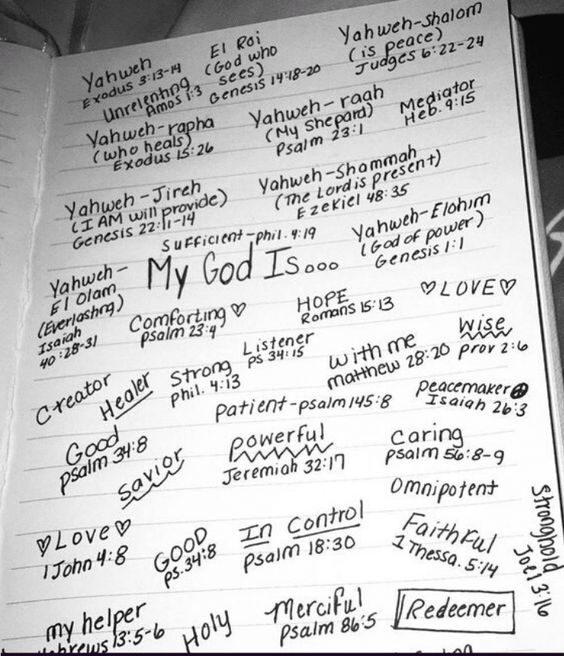
Christian journaling is a way to slow down, put thoughts into words and respond to God through prayer and Scripture. It can help you notice what is happening, record questions and review a practical response. You do not need polished writing, an expensive notebook or a long session.
Three useful benefits are attention, honest expression and a record of growth. Writing can help you notice details that pass quickly in thought. It also lets you return to a request or decision later. A journal is a personal aid, not proof that every impression is a message from God.
Follow the practical steps · Begin the seven-day guide · Read common questions
How to begin, step by step
1. Choose a private, manageable format
Use paper or a digital format you can keep appropriately private. Decide how you will store sensitive information. You can begin with a few lines rather than filling a page.
2. Use a simple four-line pattern
Write: what happened; what I feel or wonder; what the Bible passage says; my prayer and next step. Separate the passage’s actual words from your own interpretation.
3. Test impressions thoughtfully
If you write what you sense God may be prompting, label it as something to consider. Test it with Scripture, sound judgement and appropriate counsel before acting, especially where other people are affected.
4. Review without judging every day
Look back for a repeated concern, an answered question or an action that still needs attention. Notice learning as well as results. Your journal does not need to prove that every week has been better than the last.
Three benefits to look for
1. Paying attention
Writing slows the movement from one thought to the next and gives you a place to notice what a passage actually says.
2. Giving honest words to an experience
A private page can hold a question or feeling without requiring a polished public explanation.
3. Reviewing growth and responsibility
Looking back can help you remember a request, a lesson or an action you intended to take. Notice learning rather than demanding a record of constant improvement.
Seven days of reading, action and prayer
Take one day at a time. Read the complete passage printed for that day, consider the reflection, take the action if appropriate and use the prayer in your own words. You can repeat a day or move more slowly. Keep a private note of what you notice and the support you may need.
Day 1 — Begin with one sentence
Open my eyes, that I may see wondrous things out of your law.
Psalm 119:18 — World English Bible
Reflect: Attention can begin with a small, teachable question.
Do: Write why you want to journal and one thing you hope to understand.
Pray: God, help me pay attention and write truthfully without needing to impress. Amen.
Day 2 — Record an observation
Your word is a lamp to my feet, and a light for my path.
Psalm 119:105 — World English Bible
Reflect: Scripture can guide the difference between observation and assumption.
Do: Write the verse and one observation before adding an application.
Pray: Father, guide my understanding and help me keep your words distinct from my own thoughts. Amen.
Day 3 — Name a feeling
In the same way, the Spirit also helps our weaknesses, for we don’t know how to pray as we ought. But the Spirit himself makes intercession for us with groanings which can’t be uttered.
Romans 8:26 — World English Bible
Reflect: Weakness can be brought into prayer without a polished explanation.
Do: Complete the sentence “Today I feel…” and turn it into a short prayer.
Pray: Holy Spirit, help me put what I am carrying into honest words. Amen.
Day 4 — Notice a gift
Every good gift and every perfect gift is from above, coming down from the Father of lights, with whom can be no variation nor turning shadow.
James 1:17 — World English Bible
Reflect: Gratitude can be specific without denying difficulty.
Do: Record one gift or act of kindness you noticed today.
Pray: Father, thank you for this gift. Help me recognise your goodness without pretending life is easy. Amen.
Day 5 — Choose an action
But be doers of the word, and not only hearers, deluding your own selves.
James 1:22 — World English Bible
Reflect: A journal can support a practical response to Scripture.
Do: Write one appropriate action and when you intend to take it.
Pray: God, help me move from reflection to a faithful, manageable response. Amen.
Day 6 — Review a question
But if any of you lacks wisdom, let him ask of God, who gives to all liberally and without reproach, and it will be given to him.
James 1:5 — World English Bible
Reflect: Unresolved questions can be carried into thoughtful conversation.
Do: Choose one question to discuss with a trustworthy Christian or suitable adviser.
Pray: Lord, give me wisdom and the humility to seek help where I need it. Amen.
Day 7 — Keep a useful rhythm
Whatever you do, in word or in deed, do all in the name of the Lord Jesus, giving thanks to God the Father through him.
Colossians 3:17 — World English Bible
Reflect: A sustainable habit can include both gratitude and honest review.
Do: Read your notes and choose a realistic time to continue next week.
Pray: Father, thank you for what I am learning. Help this habit serve truth, prayer and love. Amen.
Questions people ask
Must I write every day?
No. Choose a rhythm that helps you pay attention and return to it when useful.
Is everything I write a message from God?
No. A journal includes feelings, assumptions and interpretations. Test impressions carefully rather than treating them as automatic instructions.
Should I share my journal publicly?
You do not need to. Protect your privacy and the privacy of other people mentioned in it.
Continue with support
Explore the Growth Guides hub and continue with Declutter your mind, heart and life for a related practical guide.
If you would like someone to pray alongside you, send a prayer request. To ask about a conversation, contact ANCC. You are welcome to plan a visit to ANCC in Leeds.
Scripture quotations: World English Bible, Classic edition, public domain. The full text of each stated reading is included above. Sources: Psalm · Romans · James · Colossians. Guide reviewed and developed 18 October 2026.